Textiles · Bedding · Care
A Guide to Silk Sheets: Weave, Weight, and Everyday Care
Silk bedding is often described through its sheen and softness. Those qualities matter, but they are only part of the decision. Fiber, fabric construction, momme weight, fit, and care requirements all influence how a sheet feels and how well it suits everyday life. Understanding those details can help you choose silk bedding with clear expectations—and look after it properly once it reaches the bed.
Silk sheets begin with the fiber
Silk is a natural protein fiber. In bedding descriptions, the phrase “mulberry silk” generally refers to silk produced by silkworms fed primarily on mulberry leaves. Product specifications may also describe silk as long-strand or long-fiber. These terms concern the fiber used in the textile; they do not, by themselves, tell you the exact weave, finishing process, or how the finished sheet will behave after repeated laundering.
That distinction is useful when comparing silk sheets. A listing that says “100% mulberry silk” identifies the stated fiber content, while details such as momme, closure, pocket depth, and care instructions describe other parts of the product. No single specification tells the whole story. Think of them as separate clues: together they give a more complete picture of the bedding you are considering.
Silk’s smooth surface and fluid drape are part of its appeal. The fabric can feel cool to the touch at first, though the sensation changes with room temperature and the warmth of the sleeper. Silk is also often selected for its low-friction surface. Claims about benefits to skin or hair should be kept in perspective: a pillowcase or sheet can change the way fabric feels against the body, but it is not a treatment for a medical or cosmetic concern.
What weave tells you—and what it does not
Weave describes the arrangement of threads as they cross to form fabric. That structure affects surface texture, drape, opacity, and appearance. A silky sheen is not enough to identify a weave, and the word “silk” alone does not specify how a sheet has been constructed. When shopping, look for a product description that names the weave or construction rather than assuming it from a photograph or the fabric’s shine.
Silk bedding is often associated with satin or charmeuse-style surfaces, but terms and constructions can vary among makers. Satin is a weave structure, not a fiber: satin can be made from silk, polyester, or other yarns. Charmeuse is commonly used to describe a lightweight satin-woven fabric, but a product page should be consulted for the precise materials and construction. If a listing does not state the weave, treat that information as unknown and ask the retailer rather than inferring it.
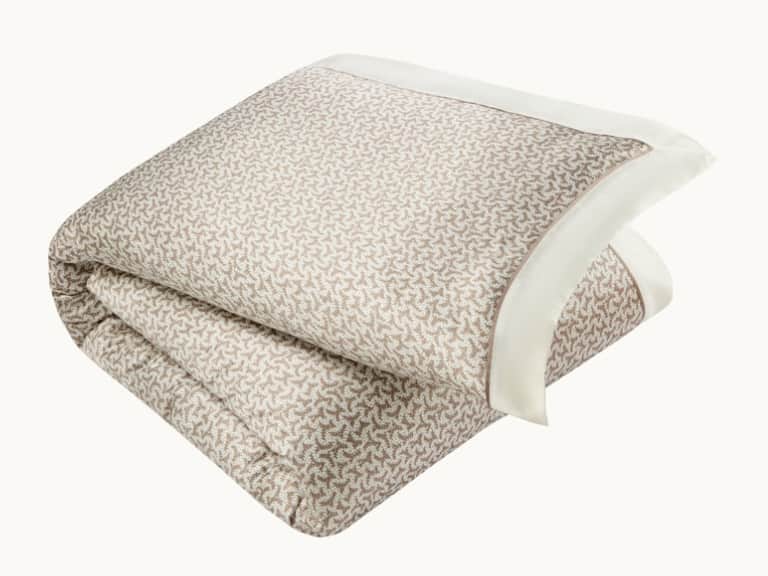
For sheets, construction has practical consequences. The surface may feel more or less fluid; the fabric may drape closely or feel more substantial; and the way it handles friction and routine use can differ. Finishing also plays a role. A border, piping, hem, or printed motif affects the look and may alter how a piece coordinates with other bedding, but decorative details do not automatically indicate a stronger or more durable fabric.
Compare like with like where possible. Check that you are comparing sheets rather than a pillowcase or duvet cover, and note whether each item is described as pure silk or a blend. Then consider weave and finish if the maker has supplied that information. If weave is not listed, place greater emphasis on the stated fiber, momme weight, care directions, and return or product-information policies.
Momme weight: a useful measure, not a quality verdict
Silk is commonly measured by momme, a traditional measure of fabric weight. It gives shoppers a way to compare the amount of silk in fabrics of a given area. Momme is not the same as thread count, and it should not be read as a universal quality score. A higher number indicates a heavier silk fabric by this measure, but the final feel also depends on yarn, weave, finishing, and the particular product’s construction.
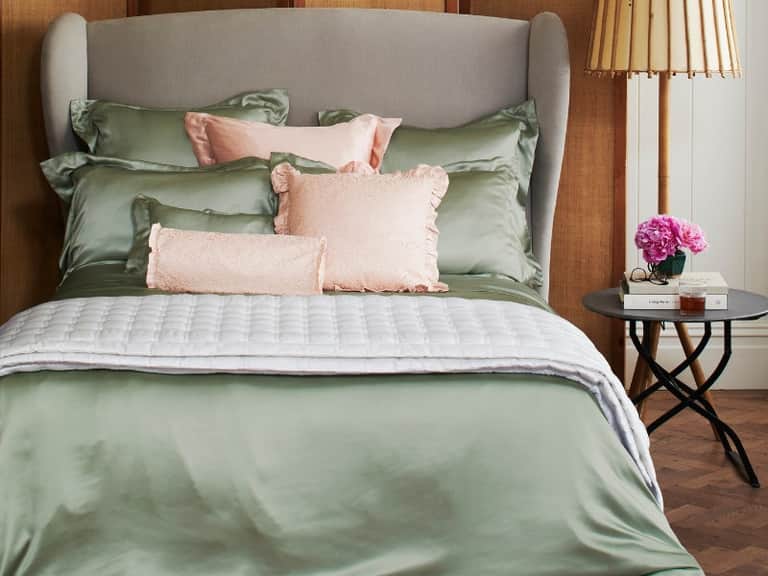
For context, Gingerlily’s listed bedding provides several practical examples. The Sage Silk Pillowcase is described as 100% mulberry silk at 19 momme, with a knife-edge finish and envelope closure. The Fern Silk Duvet Cover is also listed as 100% mulberry silk at 19 momme and has an envelope closure. These details make the stated weight easy to compare, while the product type and finishing remain distinct.
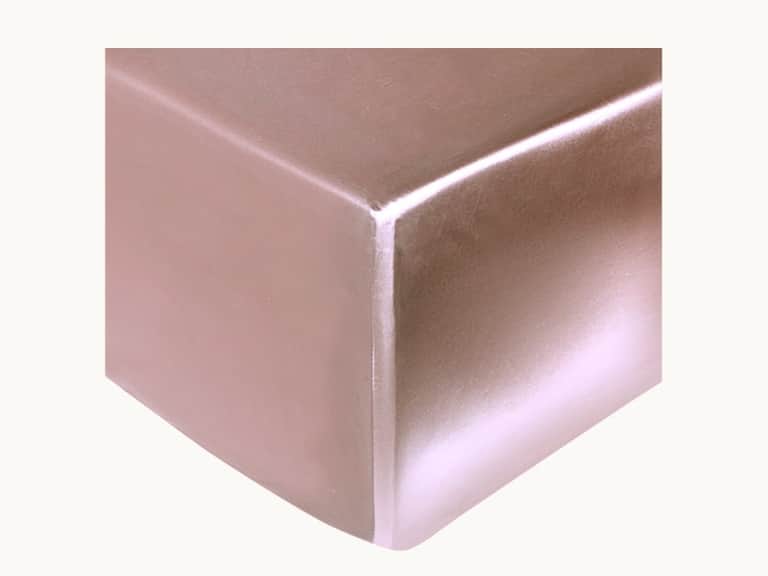
A heavier example is the Vintage Pink Silk Fitted Sheet, described as 100% mulberry silk at 22 momme. Its listing also gives a 15-inch pocket depth. That information is particularly useful for checking mattress fit; momme weight alone cannot tell you whether a fitted sheet will accommodate your mattress and any topper.
Rather than treating 19 or 22 momme as a simple ranking, consider the experience you want and the complete specification. A more substantial fabric may feel different from a lighter one, but weight does not establish that a sheet is automatically more comfortable, longer-lasting, or better suited to every sleeper. If possible, use a retailer’s fabric sample or clear product details to understand hand and drape before making a choice.
Also check whether the stated momme applies to the whole item or a particular silk component. Bedding sets can combine materials, and pillows or travel accessories may include cotton casings or blended fillings. Read the composition of each component rather than assuming that every part is silk because the product name includes the word.
Choosing between flat and fitted sheets
A flat sheet lies over the sleeper and can be tucked around the mattress or used as a light layer. Its dimensions determine how much fabric is available for draping and tucking. Before buying, compare the stated size with your mattress and your usual bed-making habits. A generous overhang may matter to one household; another may prefer a simpler, more tailored arrangement.
A fitted sheet has elasticated edges intended to hold it around the mattress. Pocket depth is a key measurement: it describes the depth the fitted sheet is designed to accommodate, though exact fit can also depend on elastic placement and mattress shape. Measure the mattress at its deepest point, including any topper you plan to leave in place. A stated 15-inch pocket, such as the one listed for the Vintage Pink fitted sheet, is a useful specification to compare against that measurement—not a guarantee of fit for every mattress.
Consider how frequently the sheet will be washed and how you will manage the fabric between wash days. A sheet that requires careful handling may be a comfortable and appealing choice, but the care routine should fit the household. If you prefer to wash bedding with a full load at higher temperatures, or need especially low-maintenance linens, silk’s more particular care may not match your normal routine.
Everyday silk bedding care starts with the label
Silk is a delicate textile, and care instructions vary by product. The item’s own label and manufacturer guidance should take priority over general advice. A sheet may be washable at home under specific conditions, while another silk item may require different handling. Do not assume that care directions for a pillowcase automatically apply to a fitted sheet, duvet cover, or a bedding set with multiple components.
For the Gingerlily examples above, the listed guidance calls for a delicate machine-wash cycle at no more than 30°C, a mild liquid silk detergent, air drying, and a cool iron if needed. The Sage Silk Pillowcase listing also recommends washing it inside out. These are product-specific instructions, not a universal prescription for every silk sheet. Check the current care label before laundering, particularly if the fabric has a print, contrast trim, or another special finish.
A careful wash routine
- Read the care label first and follow its temperature limit and cycle instructions.
- Separate silk from rough, heavy, or abrasive items such as towels, denim, and garments with zippers or hooks.
- Use a mild detergent suitable for silk when the product instructions call for it. Avoid substituting bleach or harsh stain treatments unless the maker explicitly approves them.
- Do not overload the washer. Giving the fabric room to move can reduce unnecessary rubbing and creasing.
- Use the recommended delicate setting and avoid mixing silk with items that need a hotter wash.
- Air dry as directed. Keep silk away from direct, intense heat and avoid wringing or twisting the fabric to force out water.
- If ironing is permitted, follow the stated temperature and use the lowest suitable setting. Test an inconspicuous area when the label allows and the fabric’s finish makes you uncertain.
Prompt attention can help with small spills, but vigorous rubbing may damage or distort delicate fabric. Blot gently with a clean, absorbent cloth and consult the care label before applying a cleaning product. For a difficult stain or an item whose instructions are unclear, professional advice is safer than experimenting with a solvent or stain remover.
Before storing silk bedding, make sure it is fully dry. Store it in a clean, dry place away from prolonged direct sunlight. Avoid compressing it under heavy items for long periods, which can create deep creases. These simple steps help preserve the fabric’s surface and make the next change of bedding easier.
Common buying assumptions to reconsider
- “Higher momme means best.” Momme is a useful weight measure, but it does not independently determine softness, construction, care needs, or suitability. Compare the full specification.
- “Thread count is the right way to compare silk.” Thread count is more commonly used in discussions of woven cotton bedding. For silk, momme weight is a more relevant stated measure, alongside fiber content and construction details.
- “A shiny surface proves it is silk.” Appearance is not a reliable fiber test. Confirm the material composition in the product specifications.
- “All silk can be washed the same way.” Care directions vary. Follow the instructions for the specific item, including any print, finish, or trim.
- “Temperature-regulating means a sheet will feel the same in every season.” Fabric can contribute to a comfortable sleep environment, but room conditions, bedding layers, and individual preference also matter.
- “A fitted sheet’s pocket depth is a minor detail.” It is central to fit. Measure the mattress and topper together, then compare that figure with the stated pocket depth.
A practical comparison checklist
When comparing silk sheets, make a short list of verifiable details rather than relying on adjectives such as “luxurious” or “premium.” Those words may describe a brand’s positioning, but they do not replace material and care information. A useful comparison can include:
- Fiber content: Is the item listed as 100% silk, mulberry silk, or a blend? Are all components made from the same material?
- Momme weight: What weight is stated, and is it clearly associated with the sheet or item you are considering?
- Weave and finish: Does the maker name the construction? Are borders, prints, or trims described?
- Product type: Is it a flat sheet, fitted sheet, pillowcase, or duvet cover? Do not compare different pieces as if they perform the same job.
- Dimensions and fit: Check sheet size, mattress dimensions, pocket depth, and closure details where relevant.
- Care requirements: Confirm the washing temperature, detergent guidance, drying method, and ironing instructions.
- Set contents: Verify exactly what is included. A product called a sheet set may contain several pieces, but contents differ between makers.
- Practical fit: Ask whether the care routine, feel, and laundering frequency make sense for your home.
This approach helps keep the decision grounded. It also makes it easier to compare silk with other natural bedding fabrics without assuming that one fiber is right for every bedroom. Linen, cotton, and silk each have distinct textures, care expectations, and visual character. The best choice is the one that fits the sleeper’s preferences, the bed, and the household’s willingness to maintain it.
The quiet arithmetic of silk
Silk’s appeal is immediate: a smooth hand, a soft glint, a fabric that falls in a clean line across the bed. Its practical details are quieter but just as consequential. Momme gives a point of comparison. Fiber content clarifies what the textile is made from. Weave and finishing explain its surface and drape, when those details are provided. Care instructions reveal what ownership will ask of you.
In the end, a good silk-sheet decision is less about chasing a single number than understanding the combination. Compare like products, measure the bed, read the label, and treat claims with care. If the specifications are clear and the laundry routine feels manageable, silk can become a considered part of an everyday bedding rotation—not merely a beautiful fabric reserved for special occasions.